Medical Titanium 

The Need for Medical Titanium 

Medical titanium is a broad term for commercially pure titanium and titanium alloys selected for medical devices, surgical instruments, and implantable components. Titanium has become an important material throughout the medical industry because it combines low weight with high strength, excellent corrosion resistance, biocompatibility, and dependable performance in demanding environments. For medical buyers, selecting the correct titanium grade, material form, specification, and supplier is critical.

Titanium Processing Center (TPC) is a full-service titanium distributor and processing center serving the medical industry with stocked titanium products and value-added processing services. Contact us today.

Types of Medical-Grade Titanium

Medical titanium includes several material families, but Commercially Pure (CP) titanium Grades 1 through 4 and Ti-6Al-4V alloys are among the most important. The appropriate grade depends on the intended application and its requirements for strength, ductility, toughness, corrosion resistance, and biocompatibility. Buyers must also specify the appropriate product form. Common forms include titanium billet, bar, plate, sheet, rod, and tube. TPC stocks numerous forms and grades, including Grade 5 and Grade 23 titanium and CP Grades 1 through 4.

Commercially Pure Titanium (Grades 1–4)

CP titanium contains very little alloying material compared with conventional titanium alloys. Grades 1 through 4 vary primarily according to controlled amounts of elements such as oxygen and iron, which influence mechanical properties.

  • Grade 1 offers the highest ductility and formability of the four CP grades but has the lowest strength.
  • Grade 2 provides a balance of strength and ductility and is one of the most widely used commercially pure grades.
  • Grade 3 offers higher strength with somewhat reduced ductility, while Grade 4 provides the highest strength among the four conventional CP grades.

The corrosion resistance and biocompatibility make CP titanium grades suitable for various medical applications. Depending on the device requirements and applicable specifications, uses can include implants, dental components, surgical instruments, and other medical equipment. Titanium’s corrosion resistance is especially significant in implantable applications. A stable protective oxide layer forms naturally on titanium’s surface, helping protect the underlying metal when exposed to bodily fluids.

Ti-6Al-4V (Grade 5) and Ti-6Al-4V ELI (Grade 23)

When greater strength is required, medical buyers frequently consider alloyed titanium. Ti-6Al-4V (Grade 5) contains aluminum and vanadium and provides an excellent strength-to-weight ratio, fatigue resistance, and corrosion resistance.

Ti-6Al-4V ELI (Grade 23) is a variation of Ti-6Al-4V with lower levels of interstitial elements. The “ELI” designation means Extra Low Interstitial. These controlled interstitial levels provide improved toughness and ductility compared with standard Grade 5, making Grade 23 particularly useful for demanding implant applications.

Grade 23 is commonly specified under ASTM F136 for surgical implant applications and is widely associated with orthopedic and dental implants. TPC supplies Ti-6Al-4V ELI in forms including bar and plate.


Medical Applications and Medical Implants

Titanium’s combination of biocompatibility, corrosion resistance, fatigue resistance, strength, and low weight makes it useful throughout the medical industry. Titanium is approximately 45% lighter than steel, which can help reduce the weight of implants and medical devices. Another important property is its non-ferromagnetic nature, which makes titanium advantageous when compatibility with medical imaging environments is required.

Medical applications can generally be separated into implantable and non-implantable products. Implantable applications include orthopedic implants, dental implants, spinal components, bone fixation devices, and other biomedical implants. Non-implantable uses include surgical instruments such as scissors and forceps as well as components used in medical equipment. After purchasing the appropriate raw material, downstream manufacturers may machine, forge, or use additive manufacturing processes to produce finished medical components.

Orthopedic Implants, Hip Replacements, and Biomedical Implants

Orthopedic implants can experience significant repetitive loading over many years. Materials for these applications therefore may require high strength, fatigue resistance, toughness, corrosion resistance, and biocompatibility.

Titanium alloys are commonly associated with components such as hip stems, orthopedic plates, spinal components, rods, and bone screws. Cylindrical titanium bar, for example, can provide starting material for orthopedic rods, while rectangular forms can be selected as starting stock for certain spinal components. The high strength-to-weight ratio of titanium alloys allows designers to meet demanding mechanical requirements without introducing the weight associated with some alternative metals.

Dental Implants and Other Implantable Medical Devices

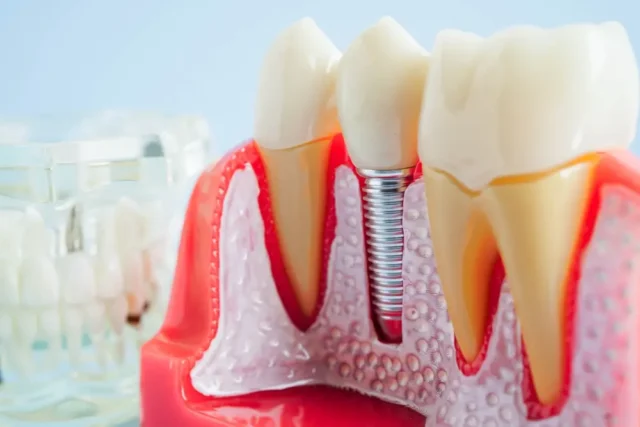
Dental implants are another major application for medical titanium. One of titanium’s most valuable characteristics in this field is its ability to support osseointegration or the direct structural connection that can develop between living bone and an implant surface.

This property, combined with titanium’s corrosion resistance and biocompatibility, helps explain its widespread use for dental implant systems. Depending on the design and specification, hexagonal and round titanium bar can provide starting material for dental components. Beyond dental implants, medical titanium can be considered for bone fixation devices, spinal implants, joint replacement components, trauma plates, screws, rods, and other long-term biomedical implants.

What to Look for When Specifying Medical Titanium

Medical titanium purchasing requires more than choosing a grade. Buyers should clearly communicate the complete material requirements to their distributor. First, require full mill traceability documentation appropriate to the application. Material identity, specification, heat or lot information, and supporting documentation can be critical for maintaining traceability through the medical supply chain. Buyers should also request evidence of applicable quality certifications.

TPC maintains AS9100, AS9120, and ISO 9001 quality management certifications covering applicable warehousing, processing, cutting-to-size, and distribution activities. The purchase specification should identify the required titanium grade, governing material specification, material form, dimensions, quantity, and acceptable near net-shape or near net-size allowance. This is especially important when value-added processing is requested.

TPC is a processing center and distributor rather than a fabrication house. Our cutting services are intended to provide customers with near net-shape or near net-size material that can then undergo final fabrication by the customer or its manufacturing partner.

Partner With the Leaders in Titanium Supply

TPC is a full-service stocking distributor serving customers in the medical industry and other demanding markets. We carry an extensive titanium inventory, including titanium billet and round bar in CP Grades 1–4, Ti-6Al-4V Grade 5, and Ti-6Al-4V ELI Grade 23. Whether you need titanium billet, bar, plate, tube, or another material form for a medical application, TPC can help identify available material that meets your purchasing requirements.

Contact Us Today to learn more about how our titanium products will help you achieve your goals and how we can shape the future of medicine together.

Discover Premium Titanium Today from a Reliable Supplier.

Contact Us for Your Titanium Solutions.

Get a Quote